Upcoming shows...
May 14, 7 - 9 pm
Sedona Creative Life Center
With Guest Poet and 2008 World Slam Champion, Ed Mabrey
Tickets available at Crystal Magic, Sedona Fit and Sedona Creative Life Center. $12 advance. $15 the night of the show. Advance tickets recommended. Sure to sell out.
SHOW QUOTES…
"Everyone I have spoken to was completely smitten with the performances. There were people who chose to come back to see you perform a second time because they were so moved. I am confident that your three day visit has planted seeds that will firmly take root and inspire people in this community to rethink their responsibility in tackling many of the social issues your group address in your performance. Several groups have already talked about the desire to have you come back.
On a personal note I was deeply moved by each person's ability to demonstrate the power of healing our emotional wounds both individually and collectively through speaking one's truth in a heart centered and non judgmental way. It was nothing short of beautiful. I believe that over the course of the three nights you were here many people were given a gift of healing that will change their lives forever if only through shifts in they way they perceive themselves and others."
Tracey Hartnett BHSc RSW, Coordinator
Domestic Violence Offender Treatment Program
As an organizer of the Vagina Monologues, a survivor, and someone committed to a cause, I am in love with the idea of the MENding Monologues! It is already a wonderful thing to get so many women, including survivors to stand up and talk about this issue and fight for it, but to get men really thinking about it, is so unselfish and admirable and a true step in stopping it that it makes my heart skip a beat at the thought of showing your play and hopefully inspiring more men to think the way you do. Thank you for this, and I hope that it spreads like a wildfire, just as VagMo has!
V-love!
Cristina
"Hearing men’s views and stories, was refreshing, even in their own darkness. I have my own story. Knowing you're not alone helps more than any one person or words could ever describe. I knew the few dollars I spent to attend was to help truly victimized women, but after leaving, I realized it was well spent on myself, as well. I'm unbelievably thankful for the awareness this work offers. Everyone that is and has been a part of it, represent a hope and encouragement."
Christina K.
"I wanted to thank you for the extraordinary experience of being at your performance last night. I was deeply touched by all the stories and everyone in the cast. So many tears and so much laughter all at once. I salute the great courage of all of you to expose and share your stories and your healing. I felt you expressed the very essence of theatre where in presenting the story the healing can happen both in the watcher and the watched, both the performers and the audience."
Jesse S.
"I just wanted to say that I LOVED the MENding Project the other night. That was so cool how many people came! Everyone loved it. It just kept getting better and better. So glad you are doing this! You really stepped up, it's awesome!"
Lori R.
"I wasn't kidding the other night, after the performance, when I said "there are no words. I am actually stumbling for words here because they don't seem adequate enough. Some of the pieces just struck a very deep cord in me and brought even more to surface of some of the things I am dealing with. I thank you."
About the show
Derek Dujardin
Director and Creator of The MENding Monologues
See the latest review of our show, click here.
As a writer, speaker and performer, Derek Dujardin is on the forefront of a new theater movement that is helping men find their voice and speak out against violence. In the process, he is helping countless men heal by getting in touch with what the true cost of violence is to their relationships.
“Men need to tell these stories and women need to hear them. It’s healing for both, and a sort of reconciliation is reached. I don’t know how to explain it. After watching our show, women tell me, ‘I didn’t know men cared or thought about these things,’” said Dujardin.
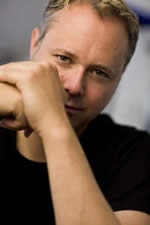
According to Dujardin, there is a ripple effect to violence. What he calls “second-hand abuse” or collateral damage done to men via the abuse done to the women in their lives. When a woman experiences abuse, her father, friends, lovers, brothers, husbands and sons—are also affected in many ways. Unfortunately, men don’t talk about these wounds and their feelings of disempowerment around violence. They ignore them, they stuff them. As a result, women think that men just don’t care.
“By telling these stories, men regain a measure of control over something they have felt powerless to help, heal, fix or smash,” said Dujardin.
Derek was inspired to create The MENding Monologues as part of the V-Day Worldwide Campaign to end violence against women and girls and to raise awareness through benefit productions of playwright/founder Eve Ensler’s The Vagina Monologues.
If you’re a fan of The Vagina Monologues, you will not be disappointed with The MENding Monologues. One might think that a show about stopping violence towards women could quickly turn into something that was heavy-handed, preachy or downright depressing. Yet, Dujardin has executed a balanced work—with an appropriate mix of dark and light (and sometime very funny) works—that is worthy of watching.
While The MENding Monologues does have a social agenda, each piece has enough artistic merit to stand on its own two feet in the theatrical world. Even without the cause behind it, these are simply great stories, expertly written and told.
“When I looked out at the audience and saw every person was crying, then laughing, and then crying again, I knew we had created something special. And, I also knew more people needed to see it. We couldn’t keep it to ourselves,” said Dujardin.
That’s when Dujardin decided to contact Eve Ensler’s V-Day organization and find out if there was room for his men to work along side the women in common cause. The answer was a resounding yes. In fact, the V-Day organization was looking for a way to reach out and include more men in their work. The timing of Dujardin’s show couldn’t have been better. While The Vagina Monologues itself will always be closed to male performers, the V-Day organization is happy to support The MENding Monologues and similar shows that are in alignment with their goal of stopping violence towards women and girls, and reclaiming peace.
“I think this is a great partnership,” comments Dujardin. “If we’re really going to stop violence, you can’t have 50% of the population believing that this is not their problem or getting turned off by the content or tone of the conversation. That’s why drama and comedy are such powerful tools for change. It makes its point—without preaching.”
Following in the footstep of their big sister, The MENding Monologues will allow individuals to stage royalty-free community shows of this work as long as the proceeds raise funds for women’s shelters or for groups committed to stopping violence. Ten-percent of the proceeds each show will fund The MENding Monologue Foundation.
“I’m not satisfied with just doing a show,” adds Dujardin. “I would like to start a movement of male artists, performers and writers doing their own shows, writing their own monologues, and having them build on what we have started. Once men get present to the real cost of violence in their own lives via the abuse and violence that’s been done to their sisters, mothers, daughters, friends, wives, and lovers, then maybe we will see some real grassroots action to curb abuse, led by strong male voices. In my opinion, that’s what is missing for men: personal relevance to violence. Making that connection between the heart and the head is what The MENding Monologues is all about."
Dujardin got his wish. A group of male performers in San Diego, started staging the San Diego-version of the MENding Monologues. There were also shows in Yakima Community College, and another group in Austila is staging a show this year, as well as group in Flagstaff, AZ.
"The San Diego group blows me away. They started writing pieces and they we're so funny and heart-wrenching and honest. Great work. It hit me that I don't need to be the only guy out there writing. There's a lot of other men out there with stories to tell and my job is just to help them tell it. And then get the hell out of the way."